
Criminal Cases in Peoria County Courts
Peoria County belongs to Illinois's Tenth Judicial Circuit. The Circuit Court is the general trial court. Its Criminal Division keeps felony, misdemeanor, contempt, conservation, juvenile-delinquency, and ordinance cases. Traffic Division keeps traffic and DUI matters. A file grows through charges, appearances, motions, orders, hearings, a plea or trial, disposition, and sentence.
The Circuit Clerk Criminal Division is at 324 Main Street, Peoria, Illinois 61602. The public counter is in Room G-22, open 8:30 a.m. to 5 p.m.; call 309-672-6000. The clerk, not the sheriff or prosecutor, controls the public judicial file.
Peoria County Tyler Case Index
The Tyler Courts and Jail Records portal is the first index for a local case. Treat the result as a lead to the clerk file, not a statewide rap sheet. Record the exact case number, type, filing date, and status. Then use the number to seek a pleading, order, or certified disposition.
The official portal shows where Peoria County court searches begin.
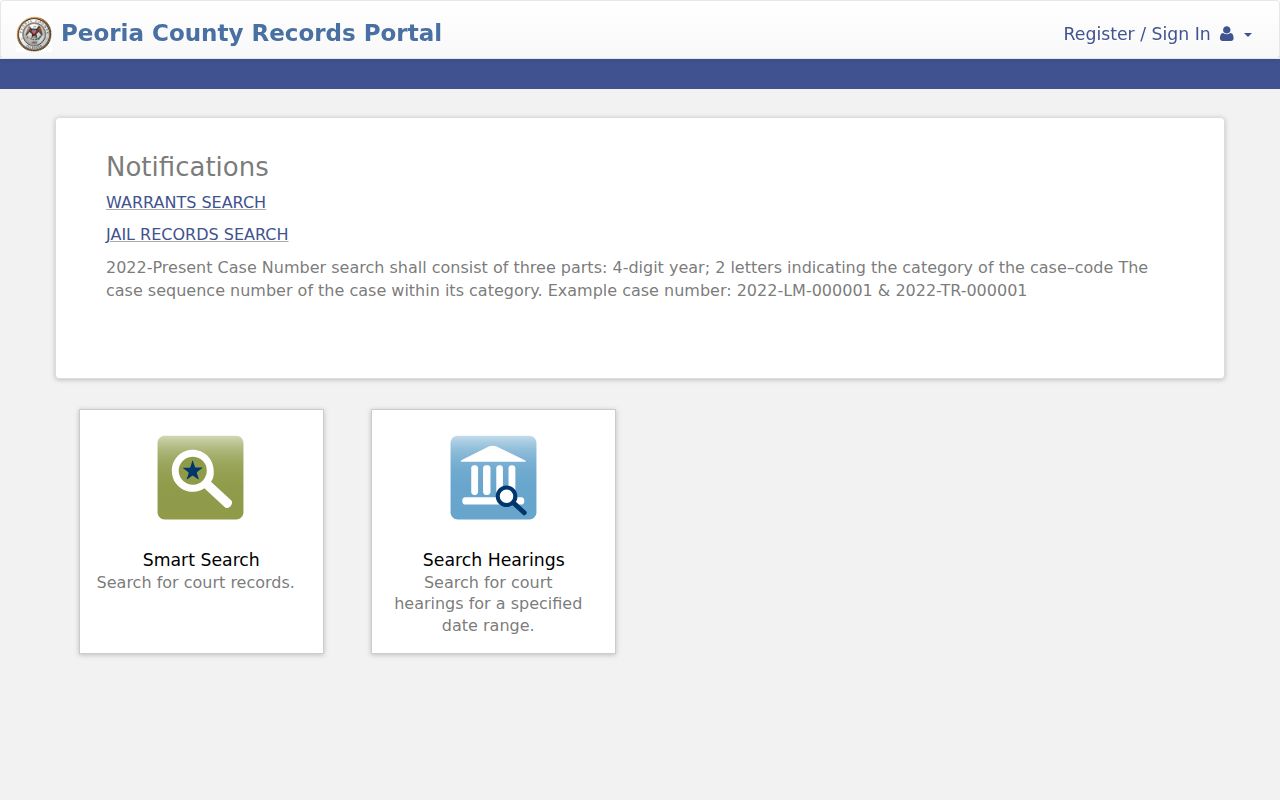
Its local index is more useful for Peoria trial cases than a broad state query.
How to Search Peoria County Case Records
Start online, but plan for a clerk request when a document is absent. Illinois has no unrestricted statewide trial-court index that replaces Peoria County's system. re:SearchIL access depends on users, documents, and court participation; free reviewing-court access does not make every circuit file remote.
- Search Tyler and note the full Peoria County case number.
- Review charge counts, docket dates, and current status.
- Use case type and filing year to separate close matches.
- Call or visit Room G-22 for a filing not available remotely.
- Ask for a plain or certified copy and confirm each count's outcome.
| Field Label | Type | Required | Notes |
|---|---|---|---|
| Party name | Text | Search option | Use legal spelling and variants. |
| Case number | Text | Search option | Best key for copies. |
| Case type | Filter | Optional | Separates criminal and traffic matters. |
| Filing year | Filter | Optional | Narrows close matches. |
Peoria County Charging Decisions
An arrest allegation and filed count can differ. The State's Attorney's Charging Division decides whether adult felony or misdemeanor charges should be filed. Prosecutors may narrow, amend, or dismiss counts, subject to court action. The clerk docket is the best source for what was prosecuted.
The State's Attorney divisions page explains this local structure.
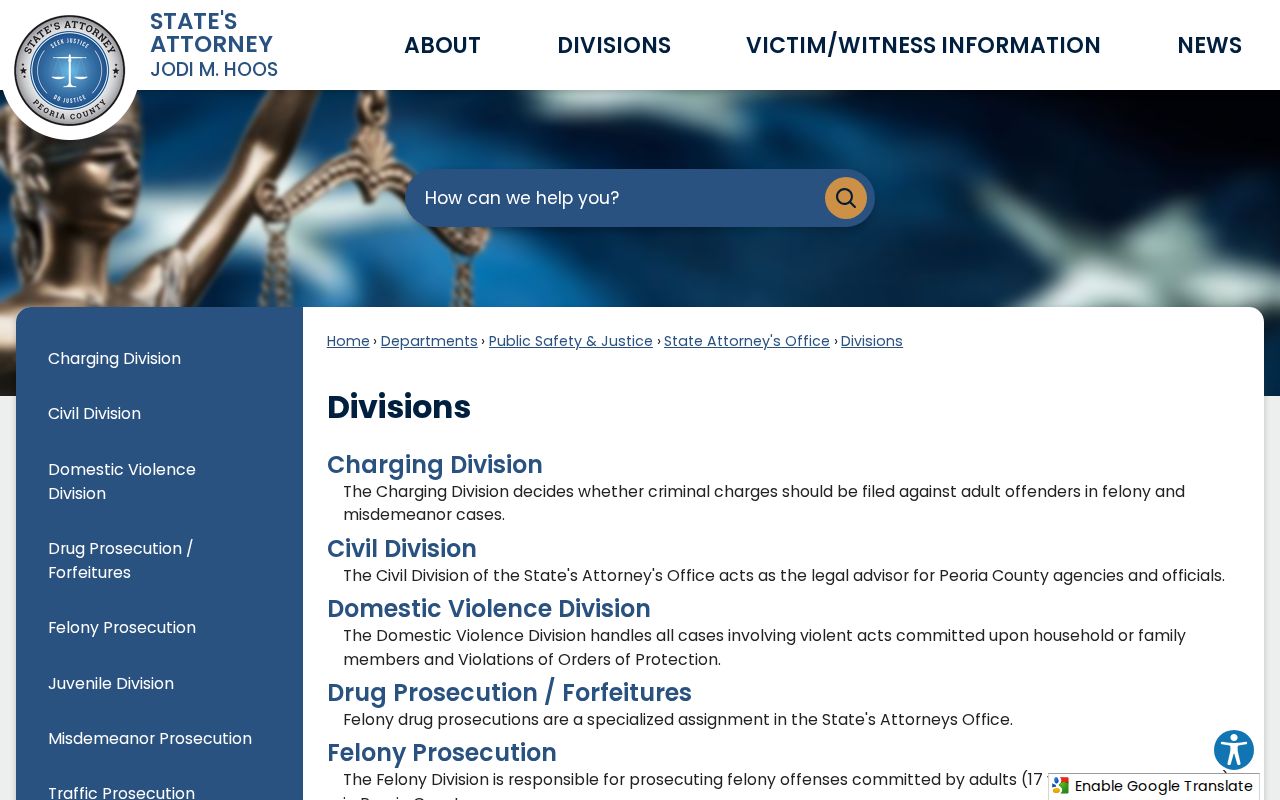
The division list shows why booking allegations do not always match later counts.
What the Peoria County Case File Shows
A Peoria County case file is a set of records, not one result line. Read each charge separately. A multicount case can end with conviction on one count and dismissal or acquittal on another. Public displays omit protected identifiers and sealed material.
| Case number and court | Clerk key and assigned venue. |
|---|---|
| Charging document | Complaint, information, or indictment stating filed counts. |
| Docket entries | Motions, appearances, orders, and continuances. |
| Hearing dates | Scheduled event, courtroom, and event type when public. |
| Disposition and judgment | Outcome for each count and date. |
| Sentence and conditions | Custody, probation, assessments, and ordered terms. |
Peoria County Disposition Terms
“Dismissed” and “nolle prosequi,” meaning the prosecutor declined to continue a count, are not convictions. “Acquitted” follows a not-guilty finding. Illinois supervision is a conditional nonconviction disposition when completed, though a public record may remain until relief applies. Read a guilty entry with the exact count, class, and sentence.
- Arraignment
- The charge is stated and a plea entered.
- Disposition
- The court's result on one count.
- Pretrial detention
- Custody ordered under current Illinois release law.
- Nolle prosequi
- The prosecution does not proceed on that count.
These terms keep a status line from being mistaken for a final finding.
Stages of a Peoria County Criminal Case
A typical Peoria County case moves through linked events. The Pretrial Fairness Act changed early release practice, so current dockets may show detention petitions, hearings, and release terms rather than a new cash-bail decision. Timing varies with motions, evidence, and trial needs.
Case flow: Charges Filed › Arraignment › Pretrial › Plea or Trial › Disposition › Sentencing
Peoria County Defense Records
The Public Defender represents qualifying people by court appointment. It is not a public lookup desk. Attorney communications, strategy, and work product are confidential. The clerk docket may identify appointed counsel without opening the lawyer's file.
The Public Defender directory identifies the office at 324 Main Street, Room G4.
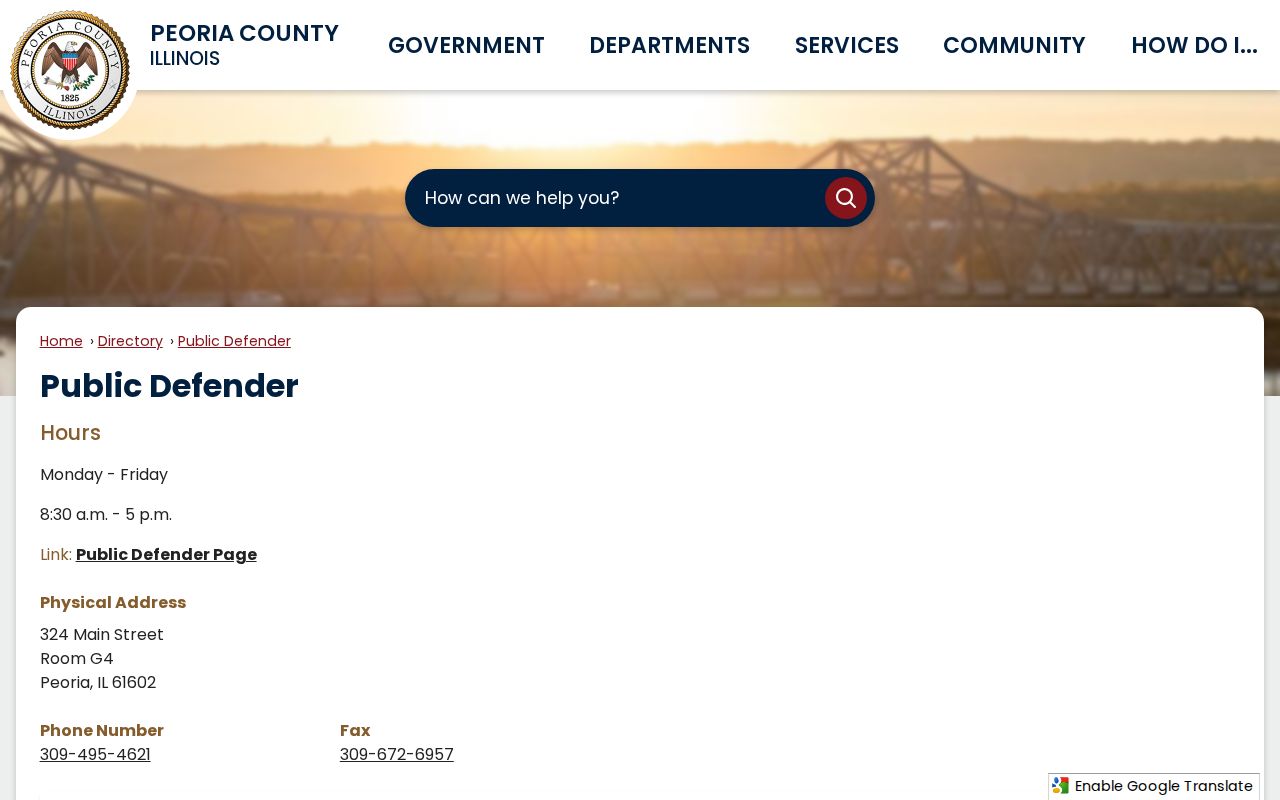
The distinction separates public judicial events from protected defense material.
Peoria Federal Criminal Cases
Federal prosecutions use the Central District of Illinois, Peoria Division, not county Tyler. The clerk sits in Room 305 of the U.S. Courthouse, 100 N.E. Monroe Street, Peoria; call 309-671-7117.
The federal Peoria court page identifies the division.
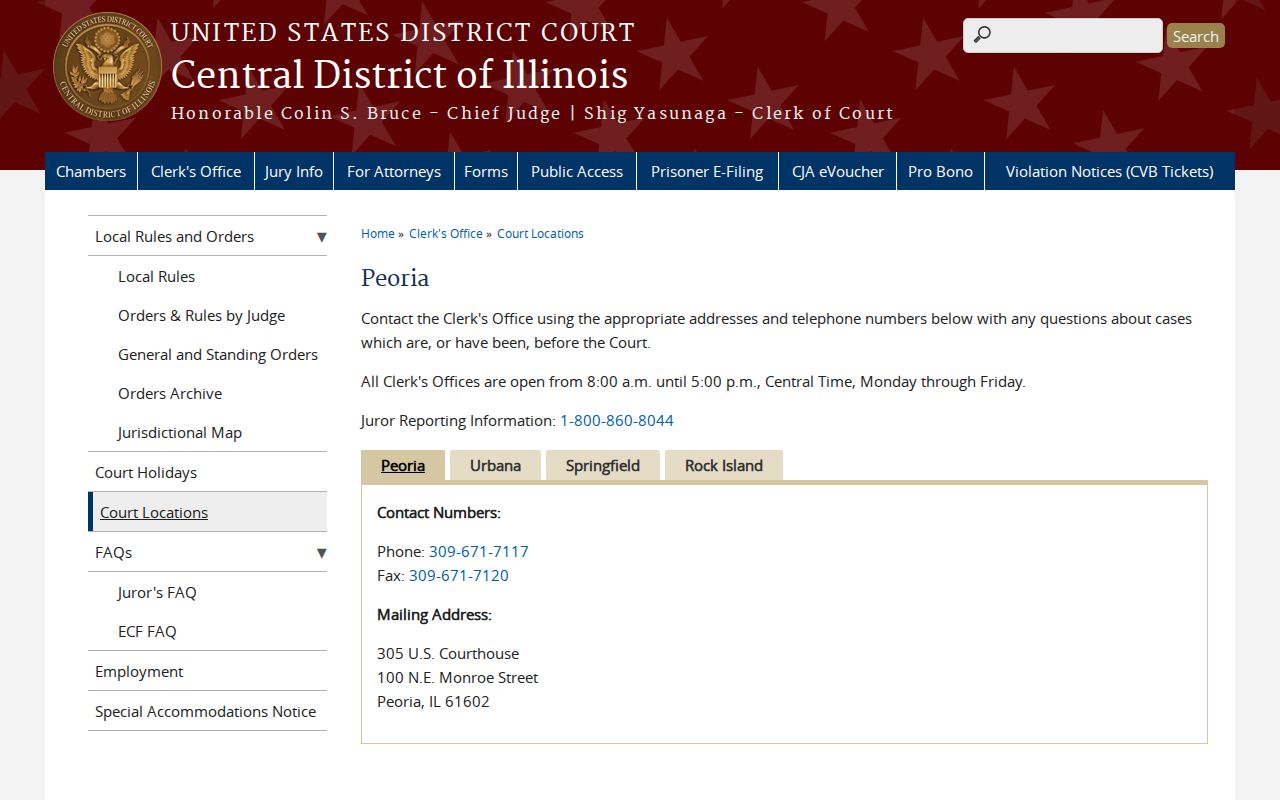
Separate jurisdiction explains why a federal case is absent from Tyler.
Documents come through PACER, which requires registration and may charge by page.
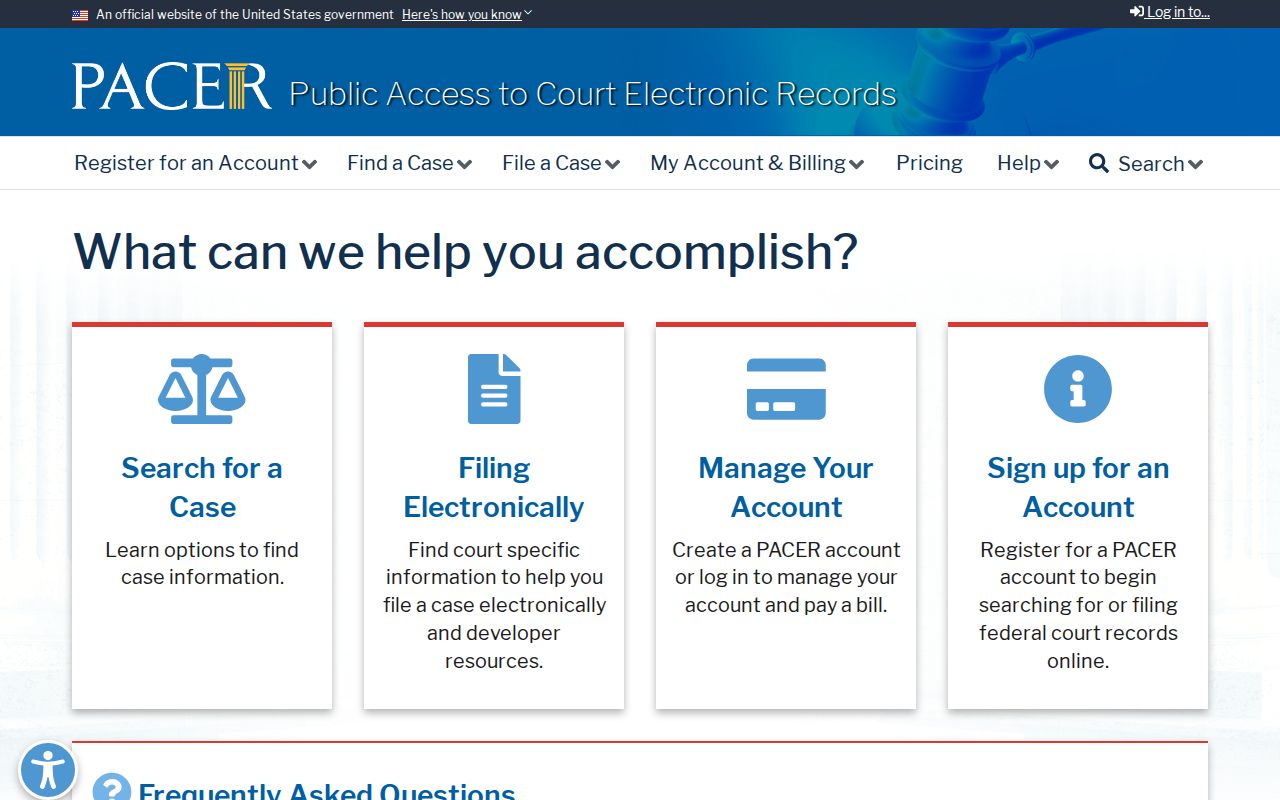
PACER is the docket route; a prison locator is only a custody tool.
Peoria County Court Search Gaps
A portal gap has several possible causes. First check the spelling, filing year, and case type. Then ask whether the event occurred in Peoria County or another Illinois county. A police incident may never become a filed court case, and a recent arrest can precede the prosecutor's filing. Older material may sit in an archive or lack a remote image. Sealing, expungement, juvenile confidentiality, and an impoundment order can also remove a matter from ordinary view.
Use the question to select the source. The arresting agency explains the claimed facts at arrest. Peoria County Jail records booking and custody. The Circuit Clerk proves what charge was filed and what the judge did. Illinois State Police Access and Review is the sound route for a person's own fingerprint-linked statewide record. None of those records should be treated as a substitute for the others.
Certification matters when an official copy of a disposition is required. The accessible Criminal Division material did not publish a reliable criminal-copy or certification price, so contact the clerk rather than borrowing a fee from the County Clerk or recorder. State the case number, document title, and whether a plain or certified copy is sought. Ask about delivery, payment, and any archive retrieval before sending money.
Finally, read the full count history. An amended charge can replace an earlier label. One count can be dismissed while another produces supervision, acquittal, or conviction. Financial assessments may continue after the main disposition, and a later appeal or postjudgment order can change the record. The latest docket and signed order provide more context than a search-result summary.
Peoria Criminal Division Counter
The clerk counter is the practical last step for a Peoria County court record that lacks a remote image. Bring the case number and identify the exact complaint, order, judgment, or disposition needed. Staff can explain the available copy and certification route, but they cannot give legal advice or interpret what an order means for a person.
The official Criminal Division page confirms the office and the kinds of Peoria County cases it maintains.
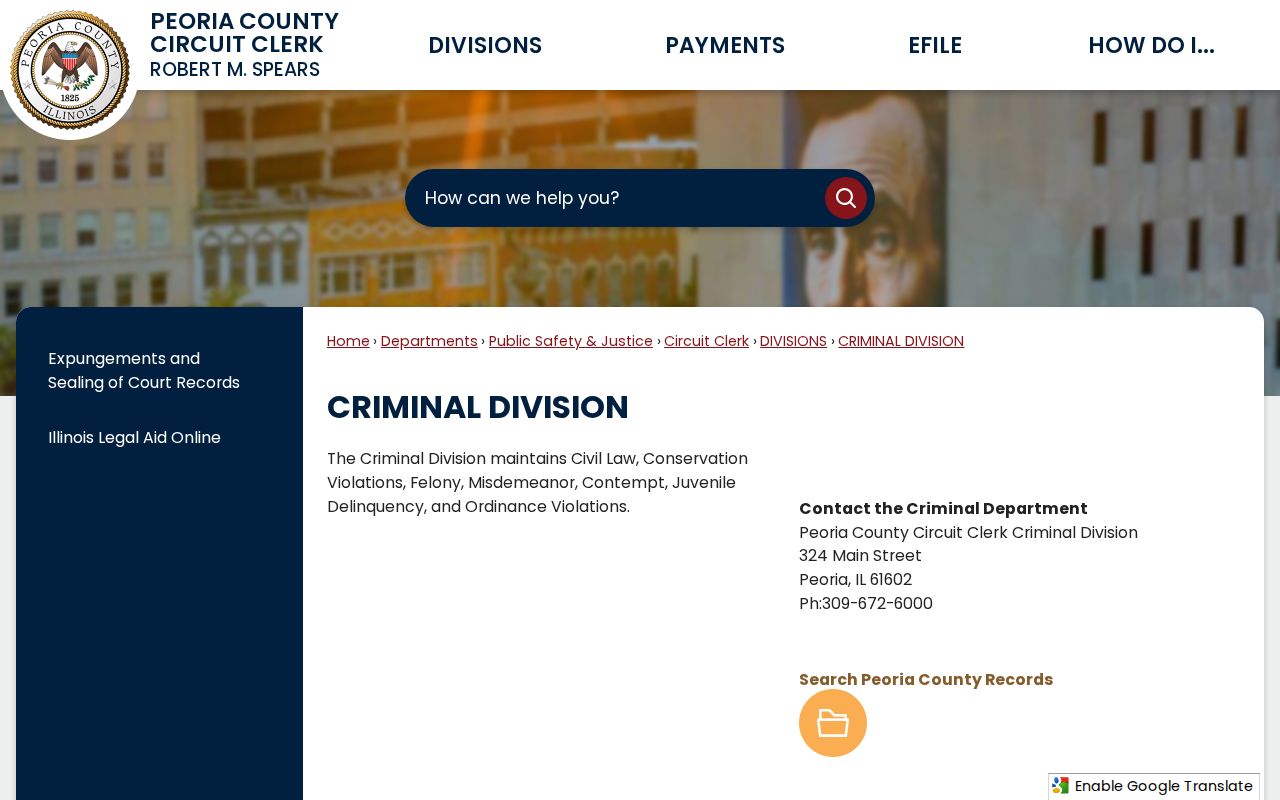
The clerk's page is the proper source for current counter details and access questions.
Case Record Access and Restrictions
Courts are not ordinary public bodies under Illinois FOIA. Access rests on court rules, statutes, clerk practice, and Supreme Court policy. Remote access may be narrower than counter access. A public document can exist even when it is not online.
Sealed, expunged, and impounded records stay out of ordinary electronic access. Juvenile records, victim and minor identities, Social Security numbers, full birth dates, accounts, and protected addresses also face limits. The electronic public-access policy describes those lines.
Note: A charge is an allegation; the disposition states the court's outcome on each count.